Automated program repair with privacy
Researching cybersecurity at Noelo Lab, University of Georgia School of Computing, under the supervision of Professor Basque.
~ $ whoami_
Code. Curiosity. Community.
Cybersecurity student. Developer. Devcontainer.
Driven by curiosity. Building technology that makes a difference.
TOBIAS SEEANNER +
const tobias = {
based_in: "Athens, GA",
field: "Cybersecurity",
mindset: "keep on trying"
};
01 / ABOUT ME
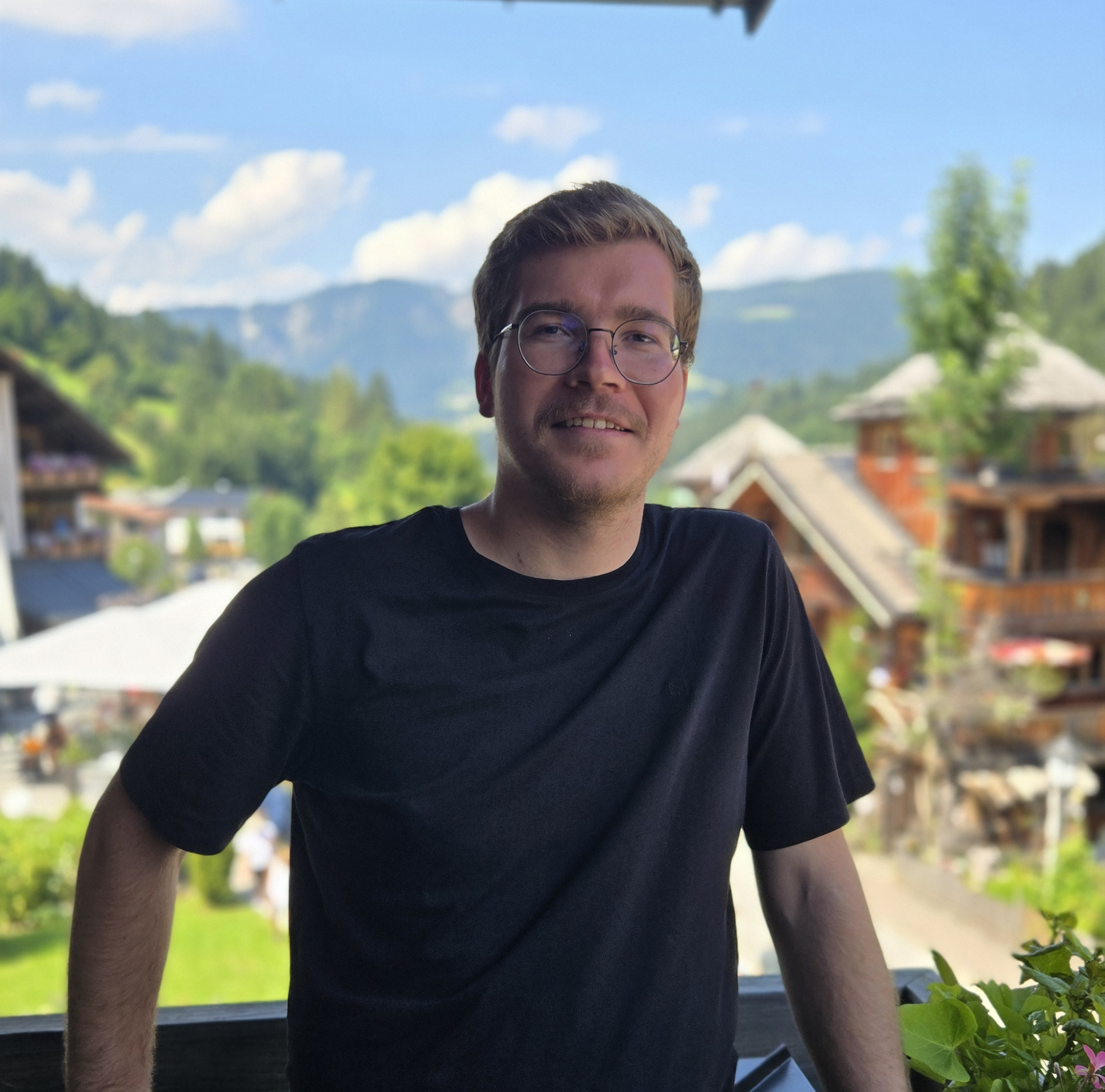
// a human behind the keyboardI’m Tobias, a cybersecurity student based in Athens, GA. I enjoy understanding how systems work — and turning that understanding into something useful.
My path has taken me from navigation systems at BMW to decentralized energy research at the University of Passau, where my bachelor’s thesis explored how energy cells can coordinate regional electricity trading. I’m now studying for my M.Sc. in Computer Science at FAU Erlangen-Nuremberg, with an exchange semester at the University of Georgia’s School of Computing in Athens, GA.
Away from the keyboard, you’ll find me on a badminton court, coaching the next generation, or heading into the mountains on skis.
02 / PROJECTS & EXPERIENCE
// ideas, put into practiceResearching cybersecurity at Noelo Lab, University of Georgia School of Computing, under the supervision of Professor Basque.
Working on LocalRES, an EU research project exploring decentralized power distribution and regional energy trading.
From requirements to implementation: a concept for automatically controlling the display content of BMW’s navigation system.
03 / PAPERS & RESEARCH
// a deeper lookTobias Seeanner · University of Passau · April 23, 2024
How can energy cells coordinate electricity trading using local information? I developed a decentralized trading algorithm that combines generation prices with transport costs derived from line impedance, encouraging energy to be consumed close to where it is produced.
I extended the VDE cellular energy concept with principles of self-organization and implemented an agent-based simulation using Mesa. Each cell first discovers potential trading partners within a price-limited range, then matches demand with affordable supply using a modified merit-order rule. Higher-priority loads are served first, with transport costs included in each offer.
Tests used two SimBench grid topologies with randomly generated demand, supply, and prices. Trading converged in both networks, with energy mostly balanced within a cell or with its direct neighbors.
| Grid | Cells | Coverage |
|---|---|---|
| Meshed extra-high voltage | 571 | ≈50% |
| Radial medium voltage | 115 | ≈44% |
The medium-voltage network’s higher transport costs and radial structure kept trading more local, but reduced load coverage. The findings highlight a tradeoff between regional exchange and meeting demand.
The model evaluates one 15-minute trading period on a fixed topology with reliable participants. Transport costs approximate grid losses using shortest-path impedance; the model does not perform a power-flow analysis. Realistic demand and generation profiles, trading across cell levels, and grid failures remain future work.
04 / BEYOND THE KEYBOARD
// good things happen togetherPostsportverein Landshut is a big part of my life. As a badminton player, C-licensed youth coach, youth leader, and IT administrator, I get to bring my interests together.
I started taking responsibility in training at 13. Since then, I’ve helped organize tournaments and training camps, supported young players, and worked behind the scenes to keep the club connected.
05 / AWARDS & RECOGNITION
// meaningful milestones~ $ let’s_connect_
A project, an interesting idea, or a conversation over coffee.
I’d
love to hear from you.